Couples Therapy for Expats in France: Navigating Relationships Across Cultures
Aline Polack
September 29, 2026
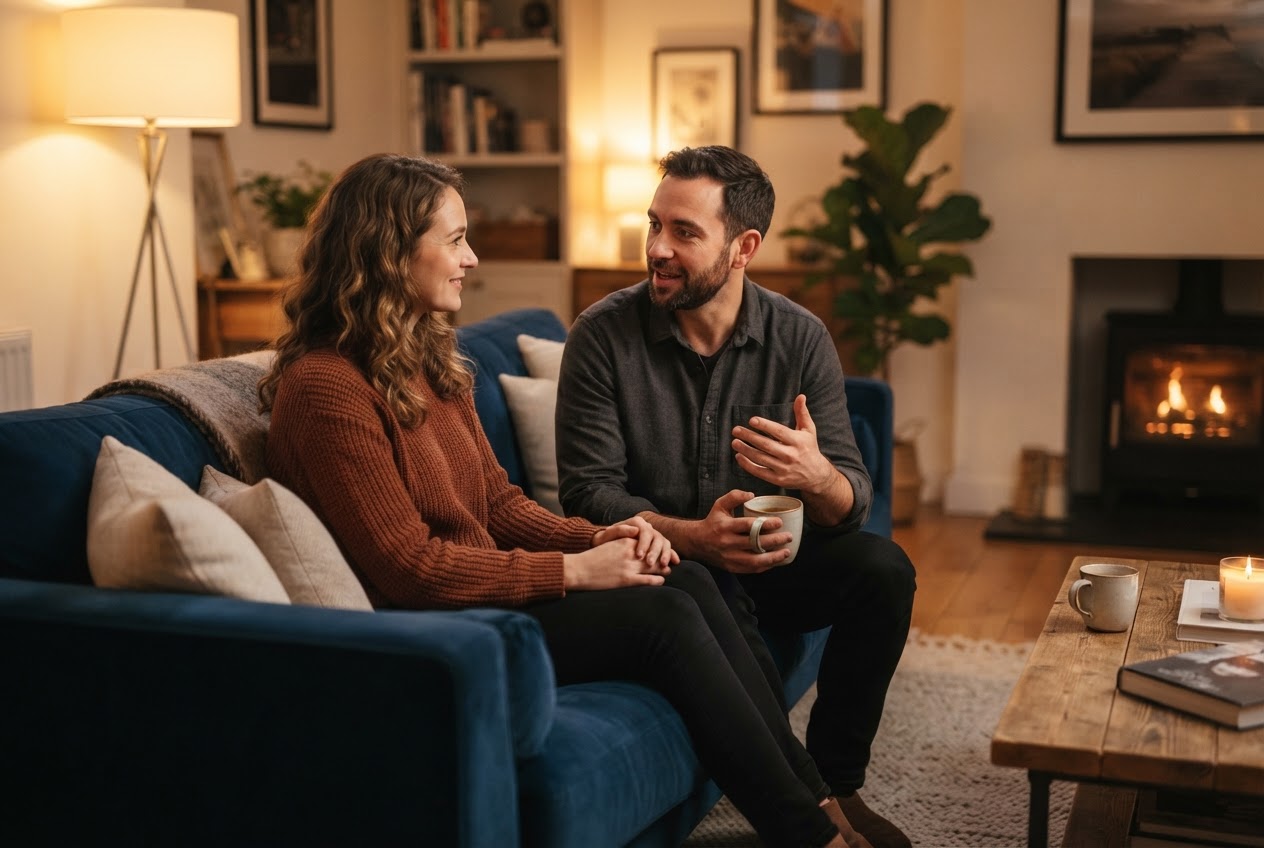
I work with a lot of expat couples here in France, and I’ve noticed something: the move abroad is rarely the problem itself. It’s what the move reveals about the relationship that matters.
When you relocate as a couple, you lose your anchors. You’re both stressed, often far from family and friends who know you. The logistical challenges alone—bureaucracy, language, finding an apartment—are exhausting. And underneath all of that, you’re both becoming new versions of yourselves in a new place. Your partner is changing. You’re changing. And sometimes you’re not changing in sync.
The Pressure on Expat Relationships
What I hear most often from couples is: “We were fine before we moved, but since we got to France, everything feels harder.”
Sometimes that’s true in the literal sense. But more often, moving abroad just puts a spotlight on things that were already fragile. When you’re home, surrounded by routines, friends, and familiarity, you can coast. Abroad, you can’t.
Language is a real barrier
I’ve worked with couples where one person learned French quickly and the other struggled. That creates an imbalance—one partner has independence, connection, social access. The other feels isolated, dependent. And when you’re trying to have a deep conversation in a language that doesn’t feel native to you, nuance gets lost. Humor doesn’t land the same way. You end up feeling less understood, not just linguistically but emotionally.
Cultural differences get magnified
A British woman and a Brazilian man might have felt their differences were charming back home. But in France, navigating different approaches to conflict, different family expectations, different ideas about friendship and social life—these become daily friction points. What seemed like interesting differences now feel like obstacles.
You’re both processing loss
Moving abroad is often framed as an adventure, and it is. But it’s also a loss—of your support system, your career perhaps, your sense of belonging. And you need to grieve that, together. If one person is fully grieving while the other is rushing to “make the most of it,” you end up emotionally out of sync.
One of you might be thriving while the other struggles
This is subtle but it’s huge. Maybe one partner got a great job, made friends easily, feels alive in France. The other feels lonely, their career stalled, wondering why they’re here. Resentment builds quietly. The struggling partner feels unsupported. The thriving partner feels guilty or frustrated that their happiness isn’t enough.
What Couples Therapy Actually Does
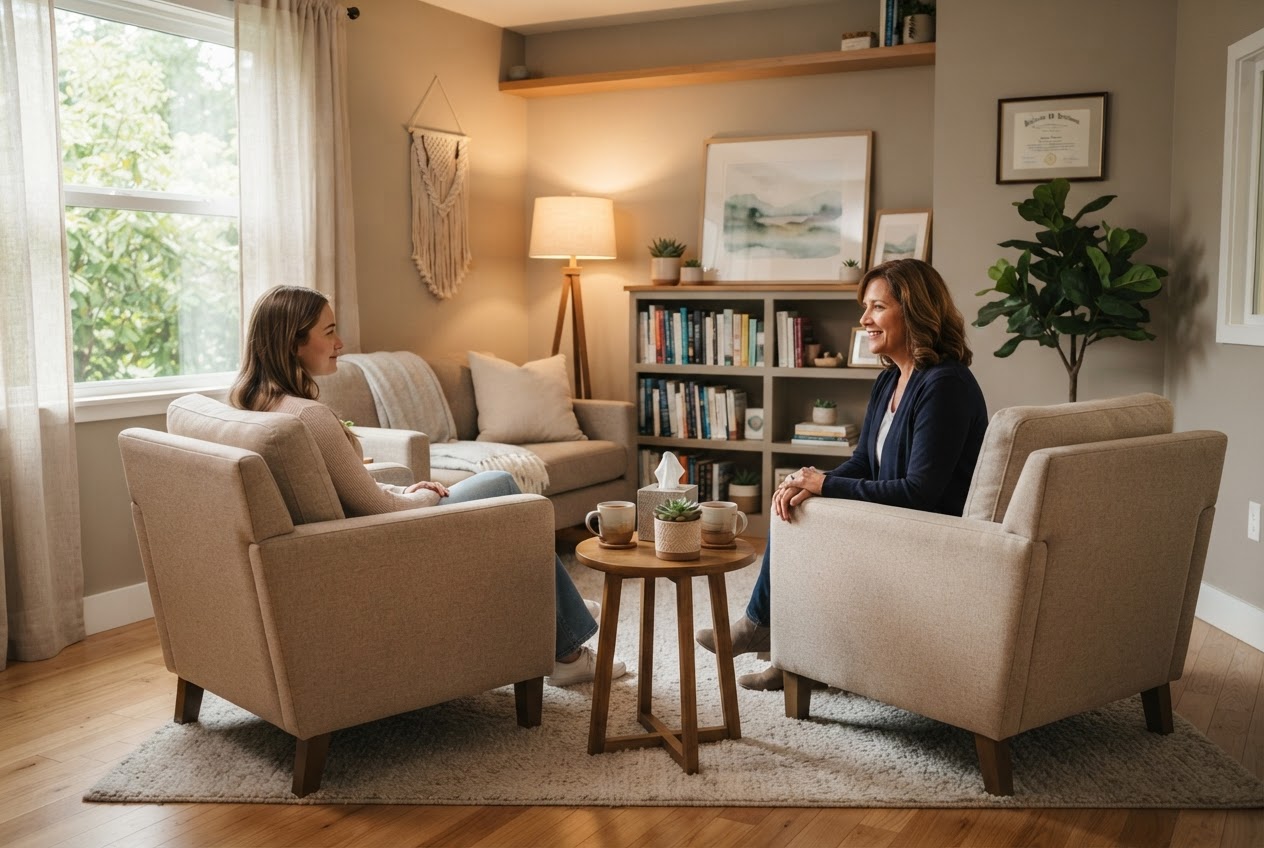
Working with expat couples is specific. It’s not just about improving communication—though that matters. It’s about acknowledging that you’re both under stress, that your relationship is adapting to a new place, and that you need to do that together.
In sessions, I focus on several key areas.
Understanding each other’s experience
Your partner’s struggle isn’t a character flaw. They’re not being “negative” about France. They’re processing a real transition. When you both recognize that, defensiveness drops and you can actually help each other.
Building bilingual competence
If language is a barrier, we work on how you navigate that together. Maybe you have important conversations in English so both of you can be fully yourselves. Maybe you work on French together, with patience. The point is deciding together, not letting it be a source of shame or resentment.
Turning cultural differences into strengths
The fact that you’re from different places doesn’t have to be a liability. I help couples understand how their different backgrounds shape the way they handle conflict, express love, or think about family. Often, once you see the cultural root of something, it becomes less personal and more navigable.
Addressing the imbalance
If one partner is thriving and the other is struggling, that needs attention. It’s not about the thriving partner sacrificing their joy. It’s about the struggling partner getting real support—maybe that’s individual therapy, maybe it’s exploring what would help them feel more grounded in France.
Creating roots in your new home
You need rituals, routines, places where you feel at home. Sometimes therapy is about building that intentionally as a couple—a favorite café, a weekly date, a friend group you’re building together.
Why This Matters Now
Being an expat couple in France is actually a gift in disguise. The stress, the dislocation, the need to be resourceful together—it can deepen your relationship if you approach it consciously. But it won’t deepen on its own. You have to tend to it.
I’ve seen couples who moved abroad and their relationships became stronger, more intentional, more real. I’ve also seen couples drift apart precisely because they didn’t acknowledge the pressure they were under. The difference is often whether they got support—whether they let themselves be vulnerable about how hard the transition was.